The fix worked in week one. By week six, it was gone. After nearly 30 years of practice, Phillip has seen this pattern repeat: the new way never failed loudly. It eroded during the first busy week because it only ever existed in one person's head. That is how many small-shop gains die, and it is the hard truth behind continuous improvement. Improvement is not a poster, a meeting, or a burst of effort. It survives only when the new step is written down where the job begins, in the words of the person who does the work. This analysis explains why small-shop fixes slide back, what sustainment actually requires, and why a one-page standard for a single changed step can hold the gain. We will examine the fix that vanished by week six, the danger of knowledge trapped in one head, the real demands of continuous improvement, and the page that keeps a change alive. You will leave with a practical standard for making improvement stick.
The Fix That Worked in Week One and Was Gone by Week Six
You changed how a call gets booked. Or how a job gets priced, or how a return gets handled. Week one, it worked. Everyone agreed it was better.
Then a busy stretch hits. A customer is standing right there, so someone takes the shortcut. Nobody says a word. Nothing looks broken. By week six the new way is gone, and nobody decided to go back. No meeting, no argument, no failure. The change simply stopped happening. When work slips through quietly like this, the missed update rarely announces itself.
Here is the real diagnosis, up front: the new step never existed anywhere except inside one person's head. It was a person, not a process.
That is why improvements in a small shop do not fail loudly. They erode. The fix is one page, and the next sections explain why that is enough.
The damage is usually obvious only in hindsight, which is why finding out after the fact is the pattern worth watching. The next question is why a step with nowhere to live always loses to the busy week.
Why Improvements Slide Back: The New Step Lived in One Head
The change itself was not the weak point. Its storage was.
Most small shops keep the new step in one place: the memory of the person who decided it, usually the owner, who is also the busiest person in the building. Memory is the least reliable shelf a process can sit on.
On a full day, the fastest path wins. Stopping mid-job to re-decide how a step should go costs seconds, and seconds are what a shop of 1 to 25 people never has in reserve. In Lean practice, re-arguing a step you already settled is motion repeated and time spent waiting on an answer you should not have to look for.
The step dies quietly, in ordinary ways. A new hire never hears about it. A temp or family member covers for a day. The owner is out and everyone improvises. None of these are discipline problems. Good people in a busy week fall back on what they remember, and if the new way was never written down, what they remember is the old way.
The change was right, it just had nowhere to live.
What Continuous Improvement Actually Requires From a Small Shop
Lean gives you words for work you already do. Its focus is value and stripping out waste, and Kaizen loosely translates to "change for the better." Why a Factory Idea Has Anything to Do With Your Shop is that same translation in longer form.
Here is the piece the philosophy tends to skip. It says gains should be held. It rarely says how. What guidance exists assumes a quality manager, a document system, and a staff that reads procedures on purpose. A shop with twelve people and a clipboard has none of that.
So translate it. Continuous improvement at this scale means one thing: the step you changed last month is still the step you do today. Nothing grander than that.
Miss it, and you get the treadmill. When every gain depends on somebody remembering it, each new improvement starts from the same baseline. Your progress reads as restarts, not a climb.
Making a gain and holding it are different jobs; the next section is the holding mechanism.
The One Page That Holds the Change
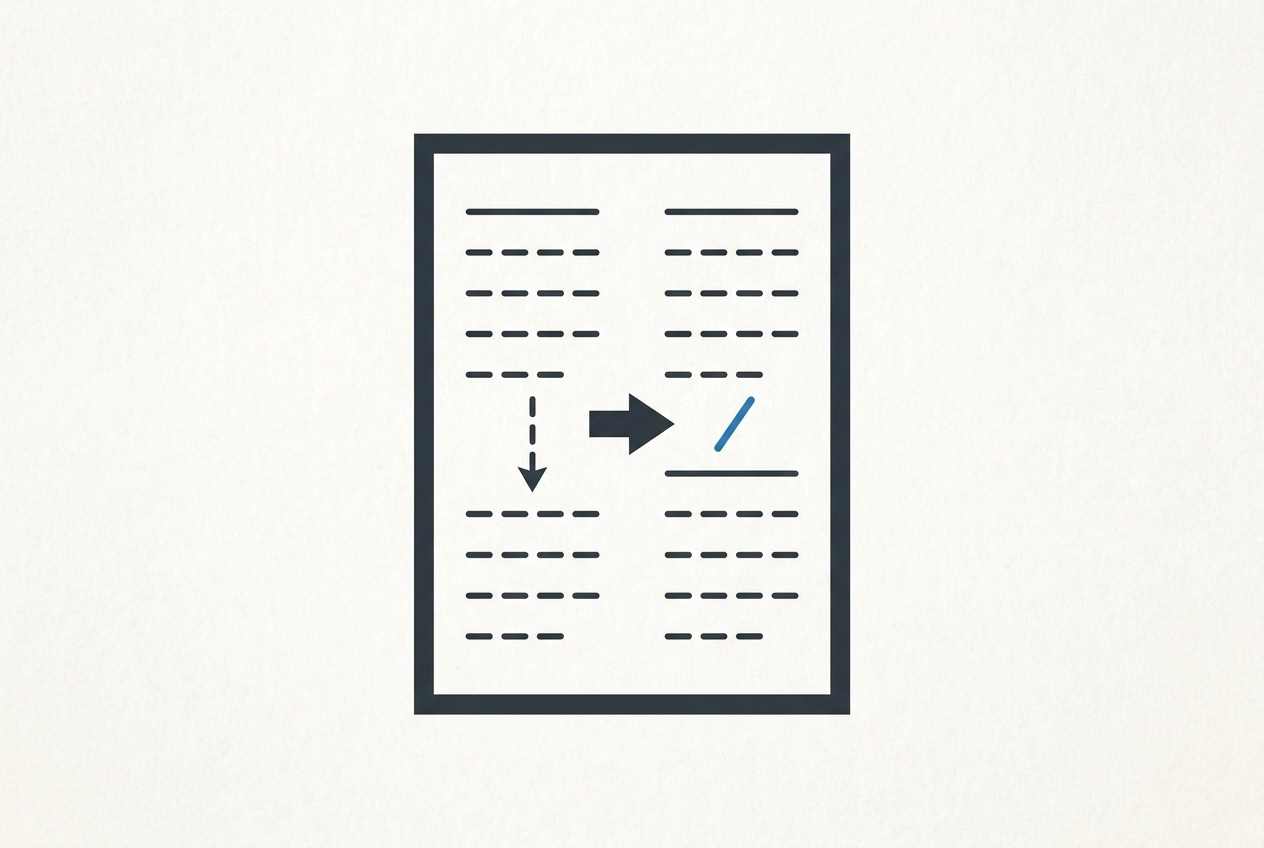
The remedy fits in one sentence: one page, one changed step, written by the person who does the work, kept where that work starts.
Every part earns its place. One changed step, not the whole process, because a full procedure nobody reads protects nothing. Written, because a step that lives in someone's head leaves when they are out. By the doer, because their words are the words the next person will hear. Where the work begins, because that is the moment someone is deciding how to do it.
Why one page specifically? It can be read standing up, mid-shift, with a customer on hold. Anything longer gets saved for later, and later never comes.
This is standard work in plain clothes. You do not need the term, a template pack, or a binder. An owner running a 1 to 25 person shop can act on it this afternoon.
Who Writes It When the Owner Changed the Process
The person doing the work. The owner's job is to make that ten minutes possible, not to author it. Supervisor support is a commonly cited barrier to applying a new skill on the job, so protecting that time is the owner's real contribution.
This is process first. The page makes the step real; only after that does it matter where the step gets recorded. Same order as what stops happening when a system fits the work.
What Goes on the Page: A Changed Intake Step, Written Down
One page, one step. Here is what that page looks like on a step most shops change at some point: the intake call.
The old way was a name on a notepad. The changed way captures what is broken, the address or unit, the best callback window, and who already quoted it. Five lines hold it down:
Trigger: A new call comes in and the job is not yet on the schedule.
Do this: Ask what is broken. Get the address or unit. Ask when they can be reached. Ask who else has quoted it.
Finished looks like: All four answers are on the ticket before the phone goes down.
Who: Whoever answers the phone.
If it does not fit: An existing customer or a warranty call gets a name, a callback time, and a heads-up to the owner.
Write it the way the person says it out loud. "Ask whether it is a rental" beats "verify property status."
Leave off the mission statement, the pricing policy, the software instructions, and anything not about this one step. A page that covers everything answers nothing.
The same shape works on a changed bid step: where the labor number comes from, what changed, and who signs off.
Test the page by handing it to someone who has never done the step. Their questions are the gaps, and the doer fills them in. That one step has to hold before you map the whole job from start to finish.
Where the Page Has to Live: Where the Job Begins
The page does not live in the office. It lives where the hand goes when the work starts: the clipboard at the counter, the inside cover of the job folder, the first screen someone opens in the morning, the glovebox of the truck that runs the calls.
A page in a binder in the office is not where the work starts, so it will not hold anything. Distance from the moment of decision is why most written procedures get ignored. Proximity, not good intentions, decides whether the step gets performed.
One page per step, when a second step changes, add a second page, and stop there.
Treat the page as a living document. Update it when the work changes, not on a monthly schedule, and let the doer mark it up in pen. A page nobody is allowed to fix becomes a page nobody trusts. That is the same failure as when getting current numbers means calling someone: the answer exists, but only one person can reach it.
For shops still running on paper and text messages, a photo of the page on the phone that person already carries is still a written standard, and it is better than nothing at all.
"I Don't Have Time to Write It Down"
That objection deserves a straight answer, not a lecture. Owners hear a hundred requests to document things, and most of them turn into unpaid homework nobody asked for. Fair.
So run the math. Ten minutes, call it that, as an illustration, by the person who already knows the step. Against re-explaining it every time a helper covers, every new hire starts, every day the owner is out. Ten minutes does not stay ten minutes when it is paid out weekly.
The time is already being spent. It just goes somewhere less useful: re-deciding the step in the middle of a job, with a customer waiting and nobody sure which version is current. Unwritten does not mean free.
Here is the shortcut that kills the excuse. You already wrote this page once. It is the text message you sent a helper explaining the new way. Copy it, tighten it, tape it up. That is the draft.
Start small. One page for the step that broke most recently.
And if the page turns out wrong, the person doing the work fixes it. That correction is the continuous improvement loop actually running, not a compliance task. A quick look back, like the 15-minute post-job review, feeds the same loop when a step fails again. Ownership is what makes it hold: the page changes when the work changes, and nobody files paperwork to fix it.
Conclusion: The Step Survives If It Is Written Where the Work Starts
What makes the correction possible is the page itself. Because the new way only ever lived in one head, the first action is to get it out of that head and onto paper.
Pick the one step that slid back most recently and write a single page for it this week, in the words of the person who does it. Not the whole process. Not a binder. One step, one page.
Put that page where the job starts, counter, job folder, truck, and let the doer mark it up.
Judge the work by the only measure that matters: is the step still being done in six weeks? Week one felt good because everyone was in the room. Week six tells you whether the step has somewhere to live.
Only after it is written and holding should you decide whether paper is still the right home. If the page keeps getting lost, or lives in three versions, that is the signal to look at where the step is tracked, whether an intake or job tracking build or crew&cost for trade contractors fits. That decision follows the standard. It does not replace it.
An improved process survives on one thing: whether the new step is written down where the job begins, in the words of the person doing it.